Showing posts sorted by relevance for query Beaufort. Sort by date Show all posts

Tuesday, October 23, 2012

The Family Spy

I heard about Emeline Jamison Pigott a number of years ago but only recently had a chance to do research on her family. According to my genealogy software she was my 2nd cousin, 4 times removed.

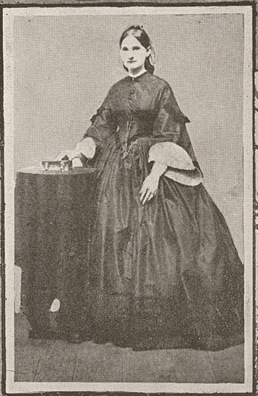
Emeline Pigott
She was born December 15, 1836 and died May 26, 1919 in the Crab Point area of Morehead City, North Carolina. Her parents were Col. Levi Whitehurst Pigott and Elizabeth Dennis. I am related to her by marriage any number of ways but by blood through the Whitehurst family. Her grandmother, Margaret Whitehurst, was the sister of one of my great grandfathers, Richard Whitehurst.

Levi Whitehurst Pigott has the title Colonel in many stories about his daughter but not on his tombstone. I have yet to find any documentation that he was given that rank while alive. He was listed as a 16 year old Private on the Muster Roll of Pinkham's Carteret County Militia during the War of 1812. I haven't found any other record of military service. I would like to think he earned the title in the North Carolina Militia but suspect it was given after his daughter became famous and he was already dead. I guess my kids can do that for me down the road.

If you grew up in North Carolina you probably know about Emeline Jamison Pigott because even today her story is taught in elementary school history classes. She is known as the North Carolina Confederate Spy.

Reproduction of her dress

Emiline was arrested towards the end of the Civil War and charged with "blockade running." Beaufort, NC had a new Provost Marshal, Major Charles C. Graves of the 1st NC Union Volunteers who was appointed to the position about the same time General Ulysses S. Grant made an inspection of Beaufort and Morehead City on January 29, 1865. Grant must have given orders to clean up things because they put Emeline under surveillance and on February 8, 1865 arrested her while she was in Beaufort.

The February 17, 1865 edition of the North Carolina Times said "she was discovered carrying articles and letters addressed to rebels outside of our lines. The letters denounced the Federals calling them Yankees and Buffaloes (a derisive term for NC men who joined the Union army) and gave information about the supposed movements of Federal troops. A very large and prominent store in Beaufort was closed as it was supposed to be in complicity with Miss Pigott. This is one of the most important arrests that has been made in the area."

She had been carrying notes and letters through the Union lines to confederate troops for some time along with food, clothing and medicine.

James Rumley who was the Clerk of the Superior Court of Carteret County wrote in his diary of what he called the "underground rail ways" that started in March 1863. In entries he made in June and July of 1864 he said the railway was "still going strong, bringing news of confederate military actions to Beaufort residents and passing letters and contraband items outside the Union lines."

When she was captured Emeline's dress had hidden pockets that contained confederate clothing, a pair of boots, pocket knives, razors, combs, toothbrushes and other items weighing over 30 pounds.

Emeline's Carriage

The History Place museum in Morehead City has her carriage and a reproduction of the dress she was wearing on display. They say she refused to allow Union troops to search her when captured because they wanted a black woman to do it. It took them a while to find a white female in the city who would help and by that time Emeline was able to eat or destroy most of the letters she was carrying.

She was sent to New Bern on February 12, 1865 and confined to a house that had been converted into a jail. She was held as a prisoner for several months but they let her go without ever bringing her to trial. It is rumored she threatened to reveal the names of prominent men in New Bern who were making money in collusion with the Yankees.

Her first cousin Levi Woodbury Pigott wrote the following in his diary when he heard she had been released:

"I consider her release a miracle, for the United States government had a clear case against her. She had ... several letters written to their friends in Dixie and these letters contained news about the Union army which was criminal. I was agreeably surprised, and utterly astonished, when she obtained her release."

 There are a lot of stories about her some true, some not so. She made the news often after the Civil War and even after she died. She took part in Civil War Veteran's events and memorials and organized the Morehead City Chapter of the Daughter's of the Confederacy which was named for her.

Seattle Daily Times December 2, 1934


I found this newspaper article reporting on her burial in 1934 that was copied in other papers around the country. The only problem with the story is that it was 15 years late.

 
While we were in North Carolina this past summer we stopped by the small family plot where she and her parents are buried. There was the remains of a Confederate flag next to Emeline's grave marker. We were there looking for another grave marker but I will get to that later.


You can't tell Emeline's story without covering her relationship with men, living and dead. The first was the romance she had with a Confederate soldier who she knew for only couple months and the second, apparently because of the first, the devotion she had to a dead Confederate soldier.

Montford Stokes McRae was born September 30, 1833 in Montgomery County, North Carolina the son of Daniel John & Martha McRae. He grew up in Richmond County, North Carolina. His family was pretty well off, listed as farmers on the census but having land valued at $40,000 and personal property of $10,000, which was huge back then. They had enough money to send him off to college and he graduated from the University of North Carolina Chapel Hill in 1856. He was living at home, a 27 year old bachelor on the 1860 census with an occupation of domestic. A woman listed with that title would mean she was working in the household as a servant or the wife of the owner. They both had the same title on census records from the 1800s. For a young son in a wealthy family you figure it means he didn't really do anything.

With the Civil War starting up his life changed dramatically. He enlisted as a Private on July 1, 1861 in the North Carolina 26th Infantry Regiment, Company K, known as the Pee Dee Wildcats. The 26th Infantry was stationed in Morehead City, North Carolina for several months at the end of 1861 and beginning of 1862. They were at Bogue Inlet in November of 1861 and were then moved to be part of the planned defense of Beaufort and New Bern, North Carolina.

They had a large camp in Morehead City just across Calico Creek from the Pigott home on Crab Point. During those months Montford Stokes McRae met Emeline Pigott and they started a romance that would endure till death for both of them.

After sitting around for months the 26th finally got a chance to fight the Yankees in the battle of New Bern, North Carolina on March 14, 1862. The 26th Infantry was led by the future NC Governor Zebulon Vance and was the only Confederate force that put up much of a fight that day. The Union army had over 11,000 men and easily pushed through the other Confederate units who only numbered 4,000 troops.

After New Bern fell the Confederate troops abandoned Morehead City and Beaufort and the Union troops started their siege of Fort Macon in Beaufort harbor. The next week the 26th Infantry was heading north to Virginia where they joined up with the Army of Northern Virginia. There is no record they were ever back near Carteret County so Emeline probably never saw him again.

Stokes McRae did well in the CSA over the next year and advanced to the rank of Sergent Major.Things changed for him in the summer of 1863. The 26th was with Gen. Lee at Gettysburg July 1-3, 1863 and Stokes was wounded and taken prisoner. The 26th NC Regiment suffered the loss of 588 of their 800 men at Gettysburg, the worst casualty loss of any unit on either side in the entire Civil War.

The battle report says Stokes was shot in the left thigh and the shell caused a fracture of the femur. He was taken from the battlefield and ended up in the Camp Letterman Hospital. The report sent back to North Carolina on July 23, 1863 said he had been killed. That is probably the last word Emeline had about him for many years. He actually lived for two months before dying of disease and infection on August 2, 1863 still in the hospital.

Camp Letterman Hospital marker near Gettysburg Battlefield
Stokes was buried in the Camp Letterman Cemetery at Gettysburg in the Confederate plot, section or row one. This is where the story changes for us compared to what Emeline knew of it. Today we have transcribed battle records, diaries etc., published in multiple books, some even online. Back then word of what happened after a battle was very limited and especially after a defeat like Gettysburg it would be almost impossible to find out what happened to the wounded and POWs. I know of several cases where the family had thought their son or husband dead only to receive a letter from him many months later.

Emeline back in North Carolina never knew what happened to Stokes, other than the report that he had died. She didn't know where or if he had been buried and that is the beginning of story about the next and last man in her life.
Unknown Soldier's Grave

Towards the end of the war a wounded soldier from the 26th NC Regiment, the same as Stokes, ended up in Morehead City. Emeline heard about him and arranged to have him moved to her house where she tried to nurse him back to health. Unfortunately he died and she had him buried in the family cemetery on Crab Point. At that time there were only three graves in the small plot including her father and sister Charlotte Pigott Mason. She never said if she knew the name of dead soldier or anything else about him. She refused to talk about him when interviewed later in life. The marker on his grave was inscribed "Unknown Soldier Company B 26th Regiment NCT CSA." She tended to his grave up until her own death in 1819 and she was then buried next to him.

My main reason for visiting the Pigott Cemetery last summer was to see the marker on the grave of this unknown soldier. I heard of Emiline taking care of his grave but in recent years when a census was done of the graves there was no marker found for him. I wondered if they missed it among the large memorials for Emeline and her parents. I found the remains of his grave, a concrete cover next to Emeline but there is no marker. A Confederate Iron Cross is laying next to Emeline's marker and I wonder if it was originally on his grave.


Camp Letterman Cemetery
Post Script:
The Camp Letterman hospital burial records were not available until many years after the war. From 1872 to 1873 the Confederate dead from the Camp Letterman Cemetery were exhumed and moved to cemeteries in the South. Most were sent to Hollywood Cemetery in Richmond, VA but others were used also. There is no record of Montford Stokes McRae's body being moved. If they found it, it was not identified and therefore buried as one of the unknowns. If they didn't find him then he is still there, in an open 10 acre field between a Giant Food Store and Dollar Tree on Lincoln Highway.

Camp Letterman treated over 20,000 soldiers from both sides during the four months it was open. Thousands died and many more lost arms and legs that were buried on the property in mass graves. The Gettysburg Battlefield Preservation Association says there are remains of countless soldiers still on the privately owned site. Target wanted to build a store there several years ago but backed down because of negative publicity.

Sunday, November 25, 2012

Mr. Ensley's Fire

I was reading the diary of James Rumley (1812-1881) the former Clerk of the Carteret County North Carolina Superior Court and it mentioned an event involving a Capt. Fulford (my mother's maiden name) so I decided to see who this was. Rumley kept a diary for three years during the Civil War, mainly to document what he considered atrocities committed by Yankee troops against the local folks.

His entry of October 30, 1863 detailed the fire that broke out five days earlier in the kitchen of a Mr. Ensley on Front Street in Beaufort and quickly spread to destroy five houses and one business. In listing the property owners he said one was Dr. King on Front Street and another Capt. Fulford. In fact Capt. Fulford's house was intentionally blown down with gun powder by the Union troops to try and contain the fire.

I wasn't sure who this Capt. Fulford was and Rumley didn't mention anything else about him. He does go on to say that several houses had been intentionally set fire, one culprit who he described as "some devil in human form."  He infers it was the Yankee troops who he said are "suspected of being discharged convicts from northern penitentiaries and ripe for crime."

But the fire on October 25, 1863 was apparently an accidental kitchen fire that got out of control.

1860 Census Beaufort, NC Page 146
I checked the 1860 census records to see if I could identify any of the names. There on page 146 I found a William Fulford living next to Dr. F. L. King. This was Dr. Francis Lathrop King who married Sara Ward. He received medical training at Bellevue Hospital in New York and ran a Drug Store on Front Street in Beaufort.

The William Fulford listed was my first cousin, five times removed. His father was James Martin Fulford the brother of my great grandfather, Stephen Fulford.


Cape Lookout Lighthouse
William Fulford was born in 1786 and died in 1864. He was called Captain, of the sea no doubt. His son, William Hawkins Fulford listed on the 1860 census record as a 25 year old Mariner became famous as a Ship Captain and the founder of North Miami Beach, Florida.

Capt. William Fulford was the second Keeper of the Cape Lookout Lighthouse on the Outer Banks of North Carolina.

The first Lighthouse Keeper was his father James. William Fulford spent 40 years living at Cape Lookout with his father and serving as both Assistant and Lighthouse Keeper. By 1860 at age 74 he had retired and moved to town.The census has his house valued at $2,000 and personal property of $8,000 which was a lot of money back then.

1870 Beaufort, NC
William Fulford died the next year and without resources during the Civil War his family wasn't able to rebuild the house. On the 1870 census his wife, Civil Pigott Fulford, was living in Beaufort but no longer on Front Street and in a much smaller house with two daughters and grandchildren. I'm not certain where William Fulford's house was located on Front Street but a 1870 map shows a lot owned by Mrs. Fulford between Craven and Queen Street. It is next door where Taylor's Creek Antique Store is located today.

Sunday, November 1, 2009

Sunday School Ticket

Mary Warshaw, an artist and blogger from Beaufort, NC came across a Sunday school ticket, issued to Irvin Fulford in 1851. It was from Ann Street Methodist Church in Beaufort.

My wife and I visited this church the last time we were there, since it was across the street from the B&B we were staying at.

According to an old publication about the church history that Mary Warshaw found, the Sunday school ticket was given quarterly to such members of the Church as were recommended by a class leader with whom they had met at least 6 months on trial. Those without tickets were regarded as 'strangers.'
Back then strangers were not admitted to many of the church events.
I researched Irvin Fulford several years ago because I found battle reports he had issued during the Civil War.
He was the officer in charge of the artillery defense of Fort Fisher, located at Wilmington, NC. It was the only port on the Atlantic ocean still held by the South by December 1864.
The battle reports were published in 1893 and thanks to Google have been preserved
Irvin Fulford was born in Beaufort, North Carolina on March 31, 1839, the son of Absalom Fulford and Naomi Rumley. He enlisted in the CSA on April 23, 1861 as a private and eventually rose to the rank of Lieutenant.
His defense of Fort Fisher was successful but in an earlier defense of Fort Hatteras, NC on August 29, 1861 his position was overrun and he was captured and held as a POW along with 670 other troops who were at the fort.
He was paroled six months later and returned to Beaufort where he promptly re-enlisted.
He grave is in the Old Burying Ground cemetery, behind the Ann Street Methodist Church that issued him the Sunday school ticket. I took this photo of the marker while in town.

Sunday, October 4, 2009

Sad phone call

We called the Langdon House Bed & Breakfast this week to make a reservation. It is the B&B we have stayed at on two trips to Carteret County North Carolina. The Langdon House was built in the 1700s and is across the street from the Old Burying Ground in Beaufort, one of the oldest cemeteries in North Carolina. That however was not the attraction for us after we stayed there the first time.

Back in June 2003 we visited Carteret County on a beach vacation and my hunt for dead relatives. We chose the Langdon House just because it looked convenient to downtown Beaufort. One of the best features though was the innkeeper, Jimm Prest. Jimm grew up in Florida and went to college in Gainesville but we never held that against him. He was a fantastic innkeeper. His mother was from Beaufort and he bought the house and
renovated it to operate as a B&B.

You could tell Jimm loved his job. He met us on the porch, walked us to some rocking chairs with drinks in hand and really made us feel like he was at our call 24X7 for anything during the stay. His advice was always right on.

On our second trip to Carteret County in 2006 we discovered he was also a relative. Most of the people in the small community are related and since my family lived there for 300 years there was a good chance I was related to many of them. Still, it was nice to find out he had an interest in genealogy and he was surprised I had his ancestors in my database. For the record, we were not close relations, 8th cousins are probably so far off they wouldn't print on the same page of the family tree.

One of the best memories was when we left to drive home last time we were there. We told Jimm we were leaving early and it would be too early for breakfast. He said he would put some coffee on for us late at night and we could get a cup for the road. The next morning there was no coffee and no sign of anyone awake so we packed the car and started to leave. It was raining as we pulled out and about a block away I noticed in the rear view mirror a big man running in back of the car. Jimm had already been up and fixed us a special breakfast and packed in a box with some poetry written for his "friends." He hadn't heard us until we started the car so didn't know we were leaving until he saw the car pulling out. He ran after us in the rain to make sure we had breakfast.

This week I called Langdon House to make a reservation for our trip to the Cape Lookout Lighthouse 150th Anniversary and was very sad to find out Jimm had passed away last year. He had a heart attack and died at the house. His widow Lizzet is still running the B&B so we are still going to stay there, but it probably won't be the same.

Tuesday, March 27, 2012

On this day in history

I haven't followed the Civil War stories that have been published over the last year. Being the 150th anniversary has meant there are plenty of opportunities but for this son of the South, I felt we'd already had enough of those memorials.

There is a nice blog that has covered the Florida Civil War history, which considering the lack of military action in the Sunshine State has actually been pretty interesting.

This week I saw a newspaper story about the 150th anniversary of the battle of Fort Macon, in the harbor of Beaufort, North Carolina. It caught my eye because we have been to the fort. I also found records that one of my great grandfathers dug out the clay on his land, made bricks and they were used to build the fort. I wrote about that find two years ago.

The Yankee siege of Fort Macon started on March 23, 1861 and lasted a month. The Confederates surrendered on April 26, 1862.

Fort Macon was never considered an important military target. When the war broke out the Confederates took it over but there were only a handful of Union troops and four canons. Beaufort, North Carolina has the distinction of falling to the invaders during all three of the wars fought on US soil. There aren't many cities who can make that claim.

Since I had a number of relatives from the area, I decided to see how many of them participated in the battle of Fort Macon.

William Howard Longest, who was married to my great aunt, Laura Sena Foreman, enlisted in Company H of the 1st North Carolina Light Artillery on May 25, 1861 and was inside Fort Macon when the Yankees sailed into the harbor. He surrendered and was taken as a POW by the Union troops. They only held him for four months before exchanging him for some Union POWs. William Longest was born in 1833 but I'm not sure when he died. There is a marker for him at the Newport River Primitive Baptist Church cemetery in Carteret County, North Carolina but it doesn't have dates on it. It was installed in 1998. Laura was buried there also but there is no marker for her.


William J. Foreman who was the brother of Laura Sena Foreman and my great grandmother, Hope Jane Foreman also enlisted in the North Carolina Light Artillery in 1861 and was at Fort Macon. He didn't stay for the entire battle. The Confederate records show he deserted on April 9, 1862. He was married in May 1862 to Hattie Bell in Beaufort, one month after the fort fell.


William Foreman moved to Manatee County Florida after the end of the war and claimed a homestead on Perico Island. In fact, he and his wife Hattie Bell were probably the first from Carteret County to move to Manatee County. William was born in 1838 and died in 1906 and is buried in Palma Sola cemetery in Bradenton, Florida.

Owen Foreman, another brother of my great grandmother Hope was at Fort Macon as part of the North Carolina Light Artillery and also deserted on April 9, 1862. I'm not sure what happened to him after the war. I've never found any record of him after the battle. Hope Foreman named her son Owen Dewitt Garner, apparently after her brother.

Stephen Bryant Holland who was married to my 2nd cousin Margaret Francis Pigott, was also at Fort Macon. He enlisted in Company G, 10th Regiment of North Carolina Artillery and was a Sergent when the battle started. He was also taken as a POW and exchanged after a couple months. Stephen Holland was born in 1838 and died in 1924. He is buried in the Ferrand cemetery in Carteret County, next to his wife.

James W. P. Fulford who was my 3rd cousin had also enlisted in Company F of the North Carolina Light Artillery. He was taken prisoner when the fort fell and exchanged in August 1862. He married Mary Frances Smith in 1872 and moved to Craven County. He was born in 1838, died in 1907 and was buried in Cedar Grove cemetery in New Bern, NC.

Monday, December 17, 2012

Fort Fisher

We saw the new movie about Lincoln and several parts of it made me uneasy. My wife and friends said I shouldn't expect it to follow the facts because it was historical fiction. I'm not sure what that means, I've always assumed a story was one or the other.

Anyway, one scene from the movie reminded me of a family story that I thought I would share. Towards the end of the Civil War the Yankees decided to capture Wilmington, North Carolina as it was the only southern port still controlled by the Confederates.

Now they could have done this earlier if they really wanted but North Carolina had been mostly by-passed by the northern troops. It wasn't until the Confederate Capitol of Richmond, Virginia was in their sights that they decided to close off the only obvious southern supply line still open to the Caribbean and Europe.

On Christmas Eve 1864 the Union Army and Navy attacked Fort Fisher and bombarded it for two days. Every other southern sea fort had fallen with less effort but in this case the Confederate troops fought off the Yankees with over four dozen expertly placed and manned cannon.

Christmas is normally a time of truce during wars but this was not the first exception on U.S. territory. No doubt the Union generals expected a victory that would bring them the same fame as it had George Washington four score and eight years earlier on the Delaware, but it was not to be.

A large part of the credit goes to two relatives who were commanding southern troops in Fort Fisher. The 10th North Carolina regiment was also known as the First Regiment, North Carolina Artillery. Companies F and K were manning the cannon at Fort Fisher. Lt. Thomas Arendell was in charge of Company F and Lt. Irvin Fulford in charge of Company K.

The excerpt shown above is from the book, "Histories of the Several Regiments and Battalions from North Carolina in the Great War 1864-1965" which was published in 1901.

After the December defeat the Northern forces came back in January with a new General in charge and more troops and boats and were able to overpower the Confederates.

Thomas Arendell (1831-1911) was the husband of my 2nd cousin Abigail Fulford, the daughter of William Fulford and Civil Pigott. Abigale was also the first cousin of Irvin Fulford. Thomas Arendell lived in Carteret County after the war and taught school for over 50 years. He is buried in Bayview Cemetery in Beaufort, NC.

Irvin Fulford (1839-1872) was my 2nd cousin, the son of Absalom Fulford and Naomi Rumley of Carteret County, North Carolina. Irvin never married and died soon after the war. He was living in Washington, Beaufort County, listed as a Merchant and Manufacturer of Coaches in the Branson's North Carolina Business Directory of 1869. He is buried in the Old Burying Grounds in Beaufort, NC.

Sunday, July 18, 2010

Bricks without straw

I really don't know if they used straw or not.

I've just started researching the brick making of some of my ancestors. My Fulford family who settled in Carteret County North Carolina and lived on the same land for 300 years had time to make a living in many different ways.


There is a story about the saloon they ran in the 1800s which I will have to explore on another day.

There is also the story that Joseph Fulford found a river of red clay on his property and started making bricks. The clay was located on the Straits, just behind the current Straits Methodist Church.


The Fulfords dug out the clay and made it into bricks. Some of the old bricks have been found in the water out in front of the property where they apparently fell off or were discarded from the boats taking them to places of construction.


One of those places where the bricks ended up was Fort Macon, at the point of the harbor in Beaufort, North Carolina. The old fort, built between 1826-1834 is still standing. It was later scene of the only real Civil War battle in the area around Beaufort and several of the great grandsons of Joseph Fulford were on the losing side.

Saturday, August 23, 2014

Buried under a Cannon

Otway Burns was one of the most well known North Carolina veterans of the War of 1812. He wasn't a Soldier but a Pirate. Back then the US Navy only had a few ships so they enlisted anyone who had something that would float to harass the British Navy.

Otway Burns captained a merchant ship called the Snap Dragon that the owner had enlisted to be a Privateer, a legal Pirate flying the US Flag. He was credited with capturing and plundering several dozen British merchant ships.

The British Navy decided he had caused too many problems and sent a Man of War after him in 1814. While Otway was sick at home, the Snap Dragon was captured, most of the crew killed and the ship sent off to England.

One of my mother's cousins is a distant relative. He even has Ottway as a middle name. His great great great grandfather was Francis Burns, the brother of Otway. Somewhere along the way on his side of the family they misspelled the name and it stuck.

Otway Burns Grave
Otway Burns was born in 1775 in Swansboro, North Carolina and died on October 25, 1850 on Portsmouth Island. He is buried in the Old Burying Ground in Beaufort, North Carolina just across the street from The Langdon House Bed and Breakfast where we have stayed several times. They put a cannon, supposedly from his old ship on top of his grave  in 1901.

The story is that the ship sunk 70 years earlier and somehow, someone who was not identified, found it and salvaged a cannon. I doubt the story is true, but it sounds good.

When the grave marker was dedicated in 1901 one of my distant relatives, Romulus Armistead Nunn gave the speech. He was the County Judge in New Bern, North Carolina and a local historian. He apparently wasn't convinced of the Cannon's provenance either as he said it was only purported to be from the Snap Dragon. Folks quickly forgot his comment and grave marker has become a popular tourist attraction in Beaufort.

I researched his family several years ago when someone told me my mother's cousin was a grandson of Otway Burns. I decided to check out the story and figure out if Otway had any descendants. I found the cousin descended from his brother, not Otway.

Otway became a very popular name for boys in North Carolina in the late 1800s and has carried on even today. There are also several towns and at least two US Navy ships named after him.

In the early 1900s there were several men who came forward claiming to be his grandsons. He had been married at least three times but on census records it was difficult to document the males who were in his household. There were two young males on the 1820 census but in 1830 there was only one. From the age on the 1830 and 1840 census, if this male was a son he would have to be from the first marriage.

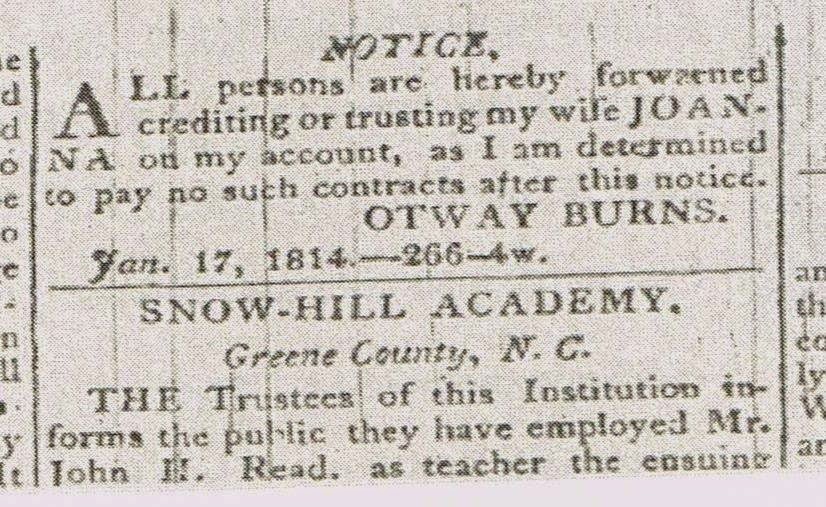
Otway's first wife was Joanna Grant who he married in 1809 and divorced in 1814. I found this newspaper AD he took out, saying he was no longer responsible for her debts.

The story is that she had a son named Owen Burns, but because there were no census records with names at this time, it is difficult to prove this true. Joanna Burns died in 1837. Owen Burns was apparently born about 1810 and died in 1869 in Maryland. He served in the US Navy for about 20 years.

Otway Burns also had a daughter Harriett, who was born in 1827 to his 2nd wife Jane Hall. There were no males born to this marriage. Harriett Burns married Richard Cornelius Canaday who's father was my first cousin, several time removed. His father Richard Canaday was the gg uncle of my great grandmother Sallie Adams Fulford.

Sunday, February 7, 2010

POW later MIA

My great great grandfather was David Fulford of Carteret County North Carolina. He was born in 1832 so was of age to have served in the Civil War, but so far I haven't found proof of his service. I have a copy of a pardon he received from the Union Army who were occupying Beaufort, North Carolina at the time, so he must have served in some way in the CSA.

He had several brothers and two of them were taken prisoner and sent to POW camps.

Richard Whitehurst Fulford was a Captain in the North Carolina 5th Infantry when he was captured on May 5, 1862 near Williamsburg, Virginia. He was held prisoner at Fort McHenry, Maryland.

William Burgess Fulford, the youngest brother was serving in the North Carolina 2nd Infantry when he was taken prisoner on November 7, 1863 at Kelly's Ford, Virginia. He was held prisoner at Point Lookout, Maryland until the end of the war. He wrote this letter to David. I found it in the North Carolina Archives.

Letter addressed to
Mr. David W. Fulford
Beaufort, NC


Return address
Prisoner of War
Point Lookout, MD
November 10th, 1864

Dear Brother David:
I seat myself this morning to write you a few lines hoping they may come to hand in due time and find you and family enjoying good health. As far as health this leaves me well. David, I have written to Mother often since I have been in prison but have received but three letters from her. So I write you hoping to hear from you soon. If this reaches you give my love to all the family. David, I have been in prison twelve months today. I hope the time will soon come that I may be exchanged. Write to me as soon as you get this and send me some money. As I am not allowed to write but one page I will now close. R. Whitehurst is here and well.

Wm B. Fulford
Co I 4th Division

William moved to Florida in 1888 and filed for a Civil War pension in 1908 but I haven't located much about him from the end of the war until when he filed for a pension.

Was he married? Did he have children? Where did he live from 1865 until 1908? So far the answers to these questions have been elusive. I've searched for him several times without success.

He was on the 1910 census in Hillsborough County Florida, 70 years old, listed as single living in a boarding house and employed as a machinist for sewing machines. That and his small pension file are the only records of his life.

Wednesday, November 8, 2017

Tearing Down Monuments


Fulford Day Memorial at Municipal building
There has been a lot in the news recently about tearing down Memorials to Political and Military leaders, Wars and even Explorers.


As a person who studies family history that is intertwined with history of the place where family lived I'm very much opposed to this.


I'm sure some folks who want to remove memorials have sincere feelings but most seem to be involved for the blood sport or because they read only the news headlines.


I discovered a War Memorial to a family member several years ago and had not written about it because I got too busy with other things. I decided to do so now before it is bulldozed over.


Beaufort News May 12 1921
James Irvin Fulford was a distant relative, a 5th cousin. Far enough that the DNA connection would be slight, but I've researched his family for a while and know several family members who are also doing research.


We share a common ancestor, Joseph Fulford of Carteret County, North Carolina.


I learned of the memorial to him and Leonard Day while searching online newspapers for family surnames in North Carolina. I found several articles about the Fulford - Day Memorial in Morehead City, North Carolina from newspaper articles in the early 1920s.


I visit Morehead City several times a year and decided to try to locate the memorial.


In May of 1921 It had been erected on Arendell Street which is US Hwy 70, the main road through town at the intersection of 8th Street.


The memorial was originally a fountain in the middle of the road, next to the railroad track.


Fulford Day Memorial Fountain on Arendell Street
There wasn't any record of it in recent years but I did locate something that said it had been moved to several blocks to Evans and Jib Street at one point and then later to the Morehead City Municipal Building many years after the building was constructed in 1926.


Two years ago while making plans to visit the area I contacted the City Maintenance department and they said it was still outside the building. I stopped by one afternoon to get the photo.


Beaufort News March 31 1921


Irvin Fulford was honored with a memorial along with another local man because they both died in WWI.


Irvin was born July 15, 1898 to Walter Ernest and DeElla Sawyer Fulford.


He was killed on October 11, 1918, one month before the Armistice of Compiegne was signed which ended the fighting. We celebrate this Armistice and our Veterans every year on November 11th.


He died in one of the last great battles of the War, at the Hindenburg Line. This resulted in a win for the Allies and the Germans losing over 36,000 prisoners. Immediately after this defeat the Germans requested an armistice.

James Irvin Fulford WWI Service Card


His body wasn't returned home until the following March.

He was buried in the Bayview Cemetery in Morehead City in a family plot that thirty years later would make room for his parents.

James Irvin Fulford Gravemarker


Sunday, December 13, 2009

A box of new markers

My girls always enjoyed getting a new box of Crayola markers for school. The marker that arrived in a box at our house this week was not one of the traditional colors.

When we visited Carteret County in October I realized that my ancestor Stephen Fulford lived in the immediate area of the Fulford family cemetery on Piper Lane and he was more than likely buried there along with his son and other family members.

Since there was no grave marker for him I decided to obtain one. I sent in the documentation of his Revolutionary War service and the other papers required of the VA Headstone and Marker Application Process. It only took about six weeks for the marker to arrive.
I don't know if his grave was marked in the past but if so, it has long since disappeared.

Stephen Fulford lived on the Straits in Carteret County North Carolina and spent his entire life on the same piece of land he was born on, his father, grandfather and great grandfather were born on. He was born in 1749 and died in 1834.

He served as a Sergeant in the North Carolina Militia during the Revolutionary War.He also served again during the War of 1812.

The family story is that he was responsible for sinking a British ship during the War of 1812. He swam out to the ship, anchored in the Beaufort, North Carolina harbor and attached an explosive to the hull. I don't know if that story is true or not but he swore to it when he filed a military pension claim. He was 63 years old in 1812 so he must have been in pretty good shape.
Of course the harbor at Beaufort is not very large so maybe he didn't have to swim far. There wasn't room on the marker to put much of his story so that will just have to be something we remember and continue to pass down.

Friday, July 4, 2014

Hurricane Arthur

Hurricane Arthur, the fast developing Cat 2 storm with 100 mph winds, made landfall last night at Cape Lookout, North Carolina. This barrier island off the coast of Beaufort, NC has become one of our favorite places since we first visited in 2003.


It is only inhabited by fishermen who rent cabins by the night or setup tents on the beach and volunteers who man the Cape Lookout Lighthouse for the National Park Service. Being a Cape Lookout Lighthouse Keeper Volunteer is still on our bucket list.


All the people on the island were evacuated before the storm so as I write, there is no word on any damage. The 150 year old Cape Lookout Lighthouse is made of brick and has taken the force of stronger winds without a problem. The old houses, part of a former fishing village that was taken over by the government, walkways over the dunes and other wood structures on the island may not have fared as well.


The land for the Lighthouse was donated to the Government in 1805 by one of my gg grandfather's Joseph Fulford and his brother in law, Elijah Pigott.

We will be in the area later this month and hope to go out to the island.


Saturday, June 20, 2015

Grandfather's Champion Oak

Nathan Adams was my gggg grandfather. In genealogy speak, that is my fourth great grandfather. His great granddaughter, Sallie Adams, was my great grandmother.

Nathan Adam's Will -1820
Nathan Adams lived on the bank of the Newport River in Carteret County, North Carolina. I have been researching the family for a while, trying to find out what happened to his grandson, William H. Adams, who was Sallie's father.

Nathan Adams was born in 1760 in Carteret County and lived in what is now Morehead City. During the Revolutionary War he served at Fort Hancock on Cape Lookout in Captain Tillman's Company.

He first acquired land in 1783 when he leased 32 acres from his wife's step father Absalom Shepard. He continued to acquire land for farming and owned over 600 acres when he died.

All of it was near the Newport river and on Bogue Sound. He wrote his will on September 9, 1820 and it distributed his personal property and a Beaufort, NC town lot among his wife and seven daughters. In 1819 he had divided his farm and plantation house among his four sons.

When Nathan Adams died in 1830 he was buried in the family cemetery on the river. There is no marker for him now but at one time there were a number of wooden markers on the older graves. During the Depression, the WPA sent workers out to compile census records of graves in cemeteries. They did a census of Carteret County cemeteries in 1937 but missed this one, no doubt because it was small and on private property.

Nathan Adam's Will - 1820
Nathan Adam's oldest son Elijah Adams (1788-1854) was the father of William H. Adams and received  half of a 50 acre plot on the Newport river which was split with his brother Jesse.

William H. Adams was shown living with his father Elijah up through the 1850 census in the Bogue Sound area and after he died with his mother in the newly incorporated Carolina City, North Carolina. On October 4, 1868 he married Hope Jane Foreman and they were shown living in Newport on the 1870 census.

William H Adams doesn't appear on the 1880 census and his wife Hope is listed as a widow. She remarried a couple years later to Samuel Garner and moved to Perico Island in Manatee County, Florida. I assume William Adams died before 1880 in Newport but haven't found any records to prove it.

I was looking for him in the the Carteret County Wills and Probate records recently, page by page, since there is no index, and came across information about his grandfather Nathan and his land holdings. In checking the location of the properties I found that 175 years after he died he was recognized for having a Champion Live Oak tree on his farm.

Nathan Adam's Oak
In 2005 a local conservation group, the Carteret County Tree Awareness Group started a campaign to locate and identify the Champion Live Oak tree for the county.  They publicized the effort in the newspaper and TV and had over 50 trees nominated. The group then went out to look at all the trees, measured and estimated ages.

The winning tree, determined to be the largest and oldest was found on the former property of Nathan Adams, in the middle of the Adams Family Farm Cemetery.The cemetery is located on Crab Point Loop in Morehead City, North Carolina. At the time of the award a gggg granddaughter of Nathan Adams still owned the land around the cemetery.

The tree is estimated to be 310 years old with a date of planting in 1705. It is located very close to the bluff of the Newport River and it has survived an estimated 100 hurricanes over the last 300 years.  

The Champion Live Oak for North Carolina is located in Airlie Gardens in Wilmington, NC. It is estimated to be 470 years old.

Saturday, June 13, 2015

Wild Ponies of Shackleford Banks

Sheckleford Banks
My wife and I have been to the Outer Banks of North Carolina several times on vacation and also for me to visit some dead relatives in the area.

One of the unique places is the Shackelford Banks, a barrier island just offshore from Beaufort, North Carolina. It is currently populated only by wild ponies.

The original owner of the property was John Shackleford who acquired it in 1713. The Island was always sparsely populated, mostly by fisherman who lived there to be closer to the fish. The last community, Diamond City, was disbanded in 1902.

My Fulford family ancestors owned land on the coast facing the Island.
Thomas Fulford grave marker

The story of the ponies on Shackleford Banks is that they can be traced to Spanish explorers who somehow got off the ships as they passed the coast and swam to shore.

I don't know how they got there but there have been wild ponies on the Island for several centuries.

In the 1800s folks from the mainland would hold round ups to collect horses, they could then use on their farms and plantations.

I found this inventory record in the estate file of my gg grandfather Colonel Thomas Fulford.

Thomas Fulford died on April 20, 1854 and is buried in the Fulford cemetery on Piper Lane in Gloucester, NC.

NC Estate Files - Thomas Fulford
Stephen F. Fulford, his oldest son, was handling the estate and acting as guardian to three minor siblings. He had to provide regular accounting of expenses and inventories of assets.

One of the items he listed in May 1861 was three ponies on the Core Banks, valued at $526.93.

Thomas Fulford's estate inventory listed him as the owner of a 200 acre tract of land on Shackleford Banks.

Wednesday, January 9, 2013

Emeline's Story

I wrote a story recently about Emeline Jamison Pigott, a distant relative who was a Confederate Spy.

I've since come across several old newspaper accounts of her arrest and thought I would share. This first one is from the Old North State newspaper which was published in Salisbury, NC and is dated February 18, 1865. The headline is "Beaufort Waiflets." Do you know what that means?


This second article, "A Blockade Runner in Petticoats" was in the Boston Herald, dated February 24, 1865.
Boston Herald, February 24, 1865 page 4
 

Saturday, July 6, 2013

Grandpa's Carry Permit

This gun carry permit was given to my great great grandfather David W. Fulford in 1867 in Carteret County, North Carolina.

It was just two years after the end of the Civil War, they were still occupied by the Union Army and Reconstruction was starting up. I guess the troops didn't like to see armed civilians running around so anyone who wanted a gun had to get approval. This document was found in the North Carolina Archives.

Beaufort, NC
December 26, 1867

Permission is hereby granted to D. W. Fulford to carry a gun for the purpose of hunting game on the Shores and Shoals of Core Sound, Carteret County from December 26, 1867 to April 30th 1868.


We've visited several times and are members of the Core Sound Waterfowl Museum and Heritage Center on Harker's Island, NC. It's a great community achievement that is preserving and highlighting not just the hunting history of the area but the local culture. I have a couple duck decoys made by Core Sounders. I don't know if David Fulford made his own decoys but I suspect he did.

Sunday, March 29, 2009

Dreams of Fulford by the Sea

When you come across a town with the name of your family you are almost required to research it to see if there is some kind of connection to your family.


I lived in North Miami, Florida for a year after college but never knew the area a couple miles north used to be called Fulford.


It was named for Captain William Hawkins Fulford who obtained 160 acres in the area by homestead in 1897. In 1912 some real estate developers bought the land from Captain Fulford with the idea they could divide it and additional acreage for residential lots. They called the development Fulford by the Sea and started selling lots in 1922.


The city development included a mile and a quarter wooden automobile race track. There was only one race at the track, in 1925 but it set a world speed record. The track and surrounding area was destroyed in a hurricane in 1926.


This was the time of the Florida Land Boom when speculators bought up worthless land and sold it to unsuspecting northerners. Fulford by the Sea was an extensive complex with wide boulevards, fountains and city services. They built a radio station and brought in prospective buyers on tour ships.
The real estate development went bankrupt several years later and the developer was charged with land fraud. It was one of the many land developments in Florida that fizzled out after the land boom of the 1920s. The State legislature changed the name of the City from Fulford to North Miami Beach in 1931.

William Hawkins Fulford was born in North Carolina in 1835. I've spent over five years off and on researching him but only recently came up with the proof that he was related to my Fulford family. According to my genealogy software he is my 2nd cousin, 4 times removed.


He was the son of William Fulford, born April 2, 1786 of Carteret County NC and Civil Pigott. His death certificate states the names of his parents. It shows his place of birth as Branford, NC but this was just an error in spelling Beaufort. There has never been a community in NC called Branford.


Because he had a city named after him there have been several books written about him. None of them were able to identify his heritage. In fact one called "South Florida History" says he was born in England. I'm not sure how they came up with that since he listed North Carolina as his place of birth on every census.
His father, William Fulford in Carteret County was the lighthouse Keeper at Cape Lookout Lighthouse. William Hawkins Fulford worked as the Lifesaving Station Keeper in Dade County Florida from 1890 to 1902. It was called the Biscayne House of Refuge.
Prior to that his occupation on census records in Florida was listed as Mariner or Sea Captain. He was the Captain of a Steamship between Jacksonville and New Smyrna, Florida for many years.


William Hawkins Fulford died in 1915. The following notice was printed in the June 4, 1915, Florida East Sentinel. "Capt. W. H. Fulford died at New Smyrna Tuesday morning. The Captain for whom this town was named and who was its first postmaster had passed his four score years and was greatly beloved by all his many friends on the East Coast where he had lived for over thirty years. He was a sailing vessel captain for many years and had sailed every ocean and had a host of friends in every port. His homestead at Fulford was bought by the Fulford Improvement company two years ago when he moved from the old stone house to his cottage on Royal Glade Boulevard. Besides his wife he leaves a son, a glass merchant of San Francisco, to mourn his death."


The article to the right is from the New Smyrna News.


William Hawkins Fulford had only one child, William Gilbert Fulford who was born in 1862 in North Carolina. He moved to San Francisco, California around 1890 and worked as paint and glass salesman for the W P Fuller Company. He filed an application for membership in the Sons of the American Revolution based on his mother's Revolutionary War ancestor. He could have also claimed membership based on his father's family since his great grandfather, James Martin Fulford was a Revolutionary War veteran also.